Saturday, November 26, 2016

The New Normal - Thanksgiving Vacation in Fez, Morocco


Since we had a 4-day break for Thanksgiving, we decided to visit the ancient Islamic city of Fez/Fes. Fez was founded by Idris I (Idris I established the Idrisid dynasty, and was the first Arab ruler) in 789; now, that's an old city!  Fez is the second largest city as well as the oldest city in Morocco.  It is one of four "Imperial Cities" (historical capital cities) in the country, and has been Morocco's capital several times. While Fez is one of the most culturally important cities in the world, it is also fragile albeit well-preserved at this point in time.


 Views of Fez from an overlook


We had a very pleasant 3 and 1/2 hour train ride from Casa. There were two Moroccan men sharing our car with us; one was an older retired history professor, and the other, probably somewhere in his 30's, teaches French in Fez. The senior man is from Casa and is very learned in history and current events.  He and Richard talked the entire way, and we plan to be in touch when we get back to the city. We didn't even know the younger man spoke English until he finally spoke up well into the trip.  As he is from Fez, we found a guide through him; he arranged it all for us by cell phone. We were very lucky to meet and be able to talk with two teachers who spoke English on top of it!  


Richard at the rear of the Fez Train Station

Fez Train Station Interior
Our guide, Rachid (Arabic for "Richard"!), met us at a coffee shop around the corner from the Fez train station.  We had refreshments and got to know him a bit.   After enjoying hot drinks on a cool, rainy day, we got into his car and drove to an overlook of the city. Immediately over the low wall is a Moroccan cemetery with typical tombstones and some impressively tiled graves.  Since we were high above Fez, the views of the city and mountains were gorgeous.

Our driver Rachid looking in the rear view


If you need a guide in Fez, Rachid is your man.  We can give you his contact info.  He's also going to set up a trip for us in the desert in February, we hope; let us know if you want to join us (I mean it)!
Rachid and Richard chatting at the overlook

View of cemetery from the overlook

Mosaic tile grave sites


View of Fez from the overlook

After seeing the sweeping views of the city, Rashid took us to the Art D'Artgile, a pottery cooperative. Here we got to see the process of creating beautiful mosaics and pottery. We were given a workshop tour where we observed the artisans at work.  We saw tiles being chipped into shapes, designs being painted on pots, carvings being etched into clay, potters working at the wheel, etc. These amazing artisans create truly stunning objects, many of which are available for sale.  It was pleasant that the showroom was basically a haggle-free zone, with prices clearly marked.  We bought a lovely bowl and wish we could have carried more back home.


Pottery waiting for decoration 

Carving clay 

Cutting mosaic shapes


Hand-cut mosaic tiles


After cutting the shapes, now the design is painstakingly created

Potters wheel powered by the potter's feet

Drawing a geometric designs on a pot using a compass, to be painted later

Artisan woman painting a free-hand design on a pot

The shop outside

The shop inside 


The shop inside


Of course, we HAD to buy a bowl. 

Next, we drove to Fez's old medina.  This sprawling labyrinth of shops is impressive, with various sections dedicated to specific artisans and craftsman.  There are more than 9,500 alleyways and streets in Fez's medina, so it is very easy to get lost. 

It is interesting to know that there was a time when this 12-centuries-old medina was almost in ruins; many palaces crumbled and fell, and the medina was becoming tattered and worn.  Luckily, in 1981, UNESCO named it a World Heritage Site, and tourists and money began to flood into the city. Many foreigners have been buying old riads  (traditional Moroccan houses or palaces with an interior garden or courtyard) and restoring them.  In fact, our guide recently put in an offer on a riad that he wants to remodel.  Rachid figures it will take him a year to get it into shape.  I hope he gets it!


Medina Knife Guy


Medina Copper Guys; cool sounds are heard in this area 


Medina Gun Repair, etc
What is exceptional about Fez's medina, compared to the others we have visited, is that it is the "world's largest car-free urban zone." Goods are transported by donkeys, mules and handcarts by shop keepers. When shopping here, there are no worries about crossing paths with a moving vehicle, which was a pleasant change for us.

Winding Medina; it's easy to get lost


Refurbished wooden doors to lock when the shops are closed


Donkeys do the hauling of supplies into the Medina
There is an American Vet in Fez who opened a clinic in Fez just to care for donkeys.  Awe, so sweet.


Beautiful lighted brass artisan creations

 
The Fez Rug shop carrying all sorts of handmade rugs


We bought the pretty rug above, which was hand-woven by Berber craftspeople.  It has various textures all woven into one very nice rug and it is really a work of art.  It even has a winter and a summer side, according to the salesman; who knew?


Newly-dyed wool


Tannery artisans dry hides which are then soaked in lime and dyed in vats that have been around for thousands of years.  They sell beautiful jackets, purses and other items in their huge shop.  You walk in and you can smell the leather.


Hides drying


Vats of lime and dye


Beautiful Leather Goods


Beautiful Leather Goods, including game boards


Lots of fresh food is available in the medina.
Olives, olives everywhere! 
Yummy fruit in the market


The biggest cauliflowers I have ever seen!


These hooves are perfect for adding a little flavor to your couscous!

Also located in the medina is the University of Al Quaraouiyine, the oldest continuously functioning university in the world, founded in 859.


University of Al Quaraouiyine
In addition, there is an interesting museum in the medina called the Nejjarine Museum of Wood Arts and Crafts.  We walked around the three floors looking at antique tools and other artifacts from everyday life.  Also housed there are works of art, weapons, musical instruments, etc.  Unfortunately, there were no English descriptions (only Arabic and French), so we had to guess at what some of the items were.  


 Nejjarine Museum of Wood Arts and Crafts


View from the restaurant where we ate lunch on the second day; very steep stairs getting up here; was hard on our old legs


Typical Moroccan salad includes separate dishes of olives, cauliflower, squash, carrots, eggplant and peppers (and more at other restaurants); who has room for the main course?


The band at La Palais la Medina Restaurant accompanied our evening meal on Friday night; strings and percussion, along with voice on some songs


Musicians entertaining us at La Palais la Medina Restaurant using interesting percussion instruments with choreography
We stayed at a beautiful hotel called the Palais Faraj Suites and Spa.  This formerly private home was built in the 19th century, is located on the south hill of Fez, and boasts breathtaking views of the city.  The palace is now owned by local entrepreneur, Driss Faceh, who hired interior designer Jean-Baptiste Barian to renovate it. Jean-Baptiste is a favorite of the Moroccan royal family and I can see why.  The palace is stunning, with marble floors, arches, columns, carved wood and plaster, and tiled geometric designs everywhere.  Our suite was huge, with a spa bathroom and a very comfortable bed. We had dinner at the hotel restaurant the first night (very good).  The hotel is situated very high up, so the views of the city from their are striking.


Entrance to the Palais Farag

Beautiful evening in Fez


We returned to Casa on Saturday afternoon on the train, a mode of transportation that is almost always a highlight of our trips through Morocco.  The train was packed, and there were eight of us in our compartment, including a six-year-old boy and a baby (yes, I got to hold him!). We enjoyed talking with the young couple with the baby. They explained that they were both from Morocco, the wife from Casa and the husband from Fez.  They have been living in France for a number of years and were back visiting family and getting Moroccan citizenship set up for their son.  The others in our car did not speak English, but that did not stop us from communicating. We gave the little boy cookies and an orange, and were offered mints from his aunt. We love to see new places, but the truth be told, this is the reason we travel. 


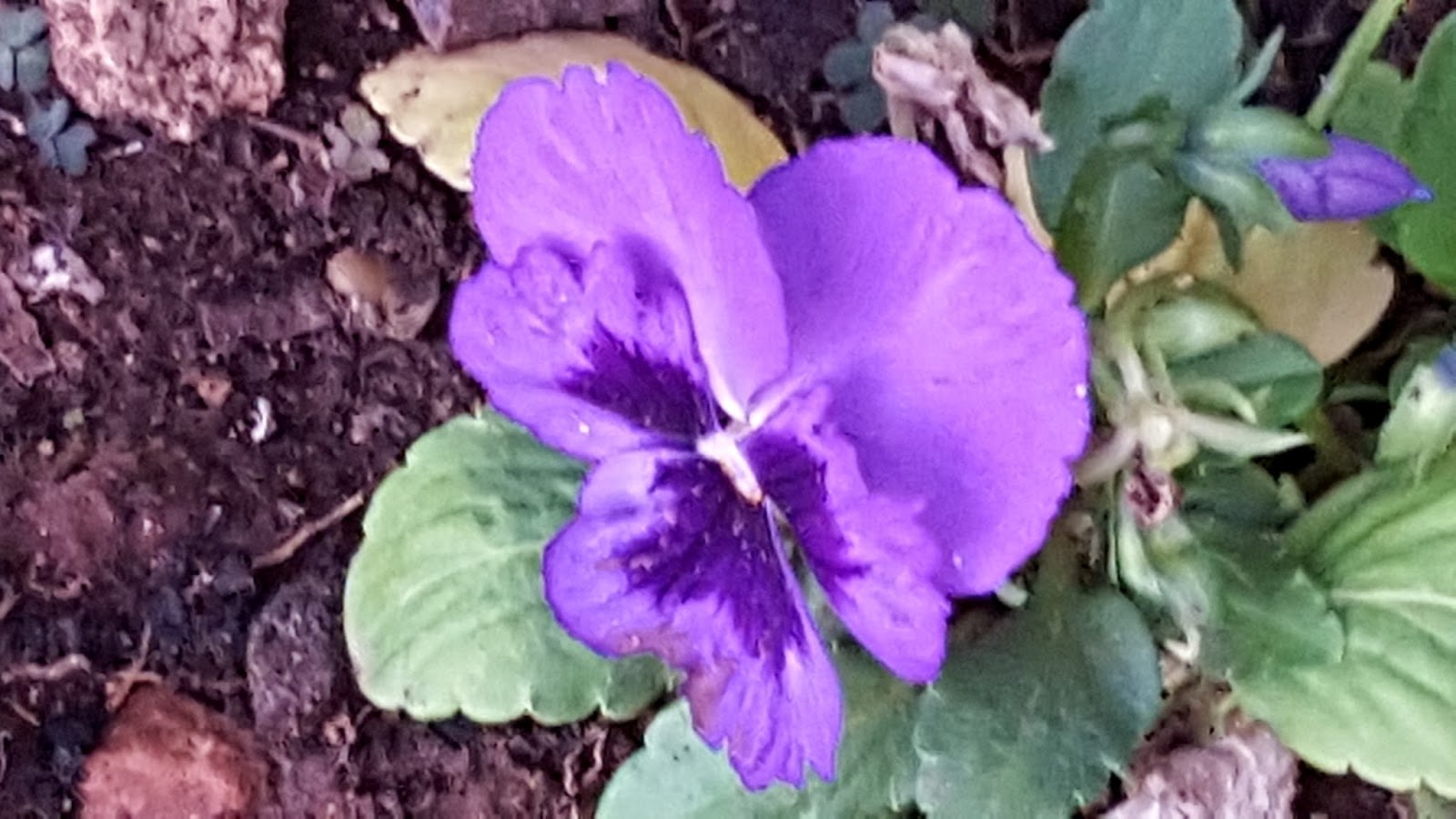
 Pansies near the hotel made me happy and remind me of home!

Every time we travel we learn.  
Every time we travel we meet interesting new people. 
Every time we travel we learn to appreciate people from cultures other than our own.  
Every time we travel we feel more a part of the world.


Saturday, November 5, 2016

The New Normal - Casablanca Transportation Trials, Tribulations, Triumphs and Tragedies

We arrived in Africa on a plane, but since that flight our transportation experience has been very different from what we are used to.  In the States, we simply hopped into one of our cars whenever we felt like going somewhere.  However, here in Morocco, Richard and I have elected not to buy a car (yet). 


Part of the reason for this decision is that the driving is somewhat treacherous in the city and is quite different from in the U.S.  Drivers here can seem aggressive, white lines are meaningless, cars make turns three or more vehicles wide, and vehicles race through intersections, continuously cutting each other off.  Mopeds and bicycles have the right of way, so car drivers have to be very vigilant not to hit one coming from any direction.  It's also hard to figure out where you are, because street signs are a rarity, and it can be hard to find a parking space.


The other reason we decided not to get a car is that other forms of transportation are available, but this can be challenging as well. Navigating the city definitely is part of the adventure of living in Casablanca.


Whenever possible we use our feet to get around locally. Richard walks to grocery stores, veggie stands, hanuts (small grocery stores), the pharmacy, etc. almost every day.  When we walk, we have to be super careful crossing the street, as pedestrians do not have the right of way.  Plus, most of the sidewalks are in rough shape, so watching where you are going is essential (no texting while walking!)  But, it's good exercise and gets the job done.

Richard's dusty feet
When it's too far to travel by foot, we take the petite/red taxis. These are available within the city, and we can get lots of places in them, like the beach, the malls, church, etc.  Meters are supposed to be required by law, and most local cabs use them.  But, on occasion we find some that don't use them. This happens more often when we are in a different city, but we have experienced it in Casa as well.  It is essential that you and the driver agree upon a fare before getting into a non-metered cab.  We find that usually non-metered taxis are a rip-off, and chose to walk until we can find one with the meter on.  


Yep, the potholes are that big!
Once in the cab, the driver often stops and adds other people to the route. Additional passengers only get in if they are going the same basic direction as the original passengers. This allows the drivers to make more money, so it's no big deal.   You also need to make sure you have small bills or change with you, as the drivers cannot/will not change larger bills. Riding the petite cabs is a great way to get around the city.


Casa Petite Taxi
When we need to go a little further outside of town, it is necessary to take a petite taxi to a grand taxi stand.  From there, six people squeeze into one white cab to get further to the outskirts of town (like GWA) and beyond.  If you want less people in your seat, you have to pay for the invisible passengers.  When the taxi is full, it is a tight squeeze, but it gets you where you need to go.

White "Grand" Taxi
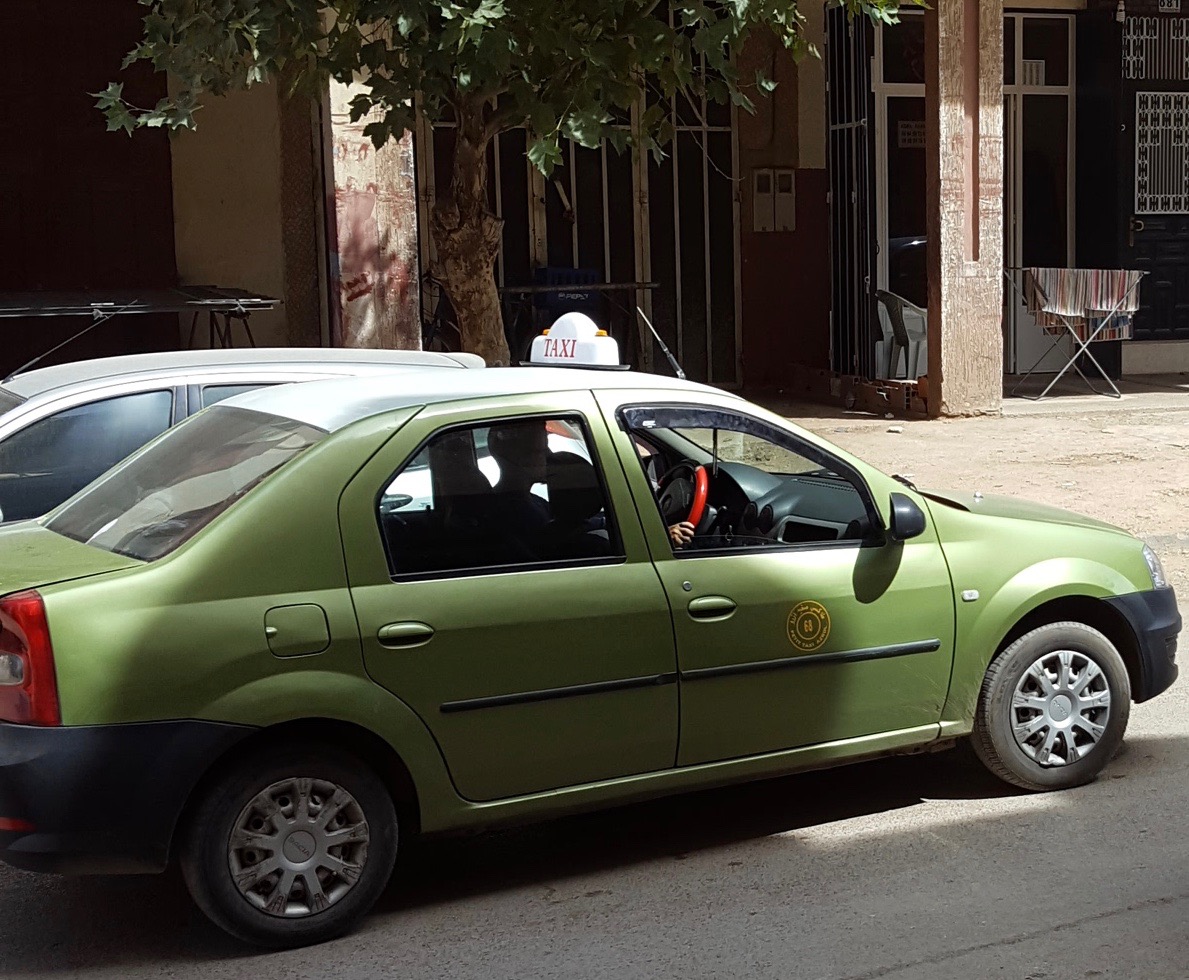
We have noticed that when we travel to other cities, the color of the petite taxis change.  In Rabat they are blue, in Ifrane green, in Tangier teal with a yellow stripe, and in Marrakesh they are yellow/cream colored.  I'm not sure the reason for the color choice of each city.


Blue cabs in Rabat
Yellow Cabs in Marrakesh
Green Cabs in Ifrane (I haven't been there yet; Richard took this photo.)


Teal with a yellow stripe in Tangier

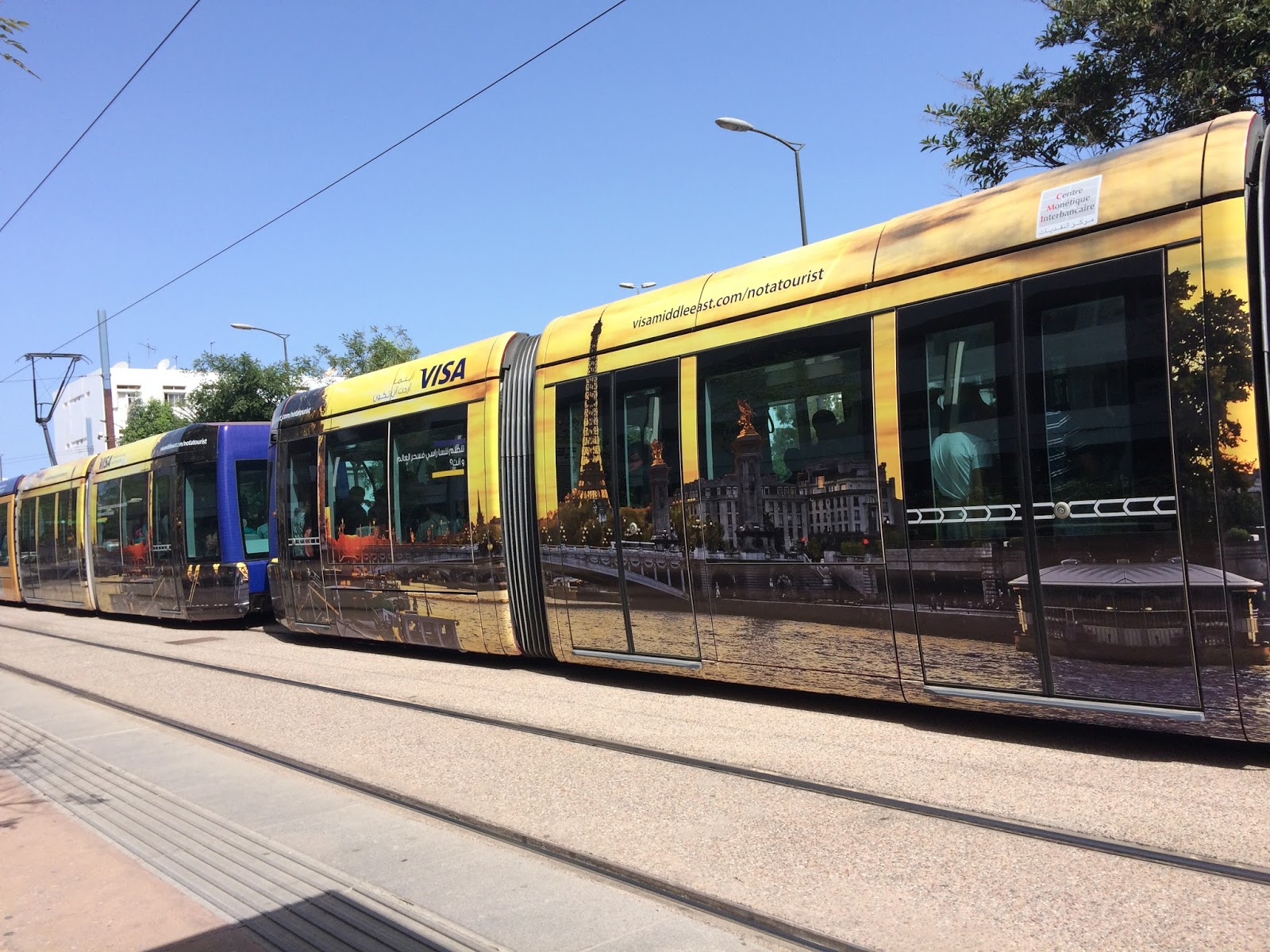
Locally, we have also used the tram, which we find to be comfortable, clean, and fast, once you get on it. Unfortunately, it has its own issues.  For example, it's a pain to put trips on your card as the machine doesn't take credit cards, so you have to have coins.  Even if you have enough coins, half of them fall through the machine.  While hassling to get a ticket, the tram comes and goes.  Also, the closest tram station to our apartment is about a 20 minute walk.  So, between the walk and the money hassles, it's usually easier just to take a red cab. 

Waiting at the tram station
The Tram
I tell anyone who will listen that I want to get a moped.  But, alas, most people think it would be too dangerous for me.  I have seen mopeds and motorcycles with entire families on them; kids, babies, old ladies, the whole family, and some even pull carts.  They weave in and out of traffic, and to me it looks like fun.  To my husband, it just looks dangerous, and I think he'd buy a car before letting me ride a moped! 

Mopeds leaned up against entrance to GWA
Moped on our street

Motorcycle with cart


Motorbike parking?

I've also considered getting a bicycle.  You see them some on the streets, some very nice but most are very old.  


Here's a really nice bike coming down our street
When we travel to other cities, we take the train.  I really like this mode of travel; it's comfortable and I really enjoy looking at the changing scenery as we go.  The first-class compartment seats six, just like the train to Hogwarts!  You can even buy snacks.  

Moslty, the trains run on time and without incident.  However, our trip back from Tangier to Casa in October took 12 hours (should have been around 4.)  Our first train broke down, we waited for repairs that never happened, then we unloaded our bags and switched trains, next the second train had to stop because another train had broken down on the tracks ahead of us.  We waited for that train to be moved, and finally made it back at 9:30PM.  Whew!


Casa Voyageurs Station
View of track and rear of train to Marrakesh
Inside of the second class section; fine for shorter rides
One of the trains
I probably will never ride the local city bus.  But, there will likely be a longer distance bus in our future for travel to cities that can't be accessed by train.  

There are also a number of "yellow" transport buses around Casa, most having a company logo.  The GWA buses are similar looking.


Transport bus


City Bus


City Bus

I rode the GWA bus for a few months to get to school.  Now I am lucky enough to carpool with a colleague.  It's nice not to have to get up quite so early, but riding the school bus isn't too bad.

The lovely ladies at the Bloom bus stop; shot taken by Richard from our apartment
GWA Bus
All this being said, I think I could get used to driving in Morocco, despite the potholes and lack of rules.  Most cars are standards, and I enjoy driving a stick.  You do see all kinds of vehicles on the road around here, but if I get one it's going to be a Hummer.  The one below looks about the right size.  I could taxi all my friends around and really travel in style.  No other cars would dare mess with me and I'll bet it's even air-conditioned.  Hmm - it might be kind of hard to park, but I can live with that!


The Casa roads are known for potholes.  


What do you think about driving 4 cars wide?  NASCAR has nothing on Casablanca!

A great link to find out about Casablanca transportation:
https://www.virtualtourist.com/travel/Africa/Morocco/Wilaya_de_Casablanca/Casablanca-2116706/Transportation-Casablanca-TG-C-1.html

Addendum:
We bought a car in May of 2017.  But, Richard is the sole driver as I still don't have the courage to brave Casa traffic.  Meet "Sparky", our Chevy Spark.


My name is Sparky . . . small, good on gas, and easy to park